I Bought My Mom 6 Kinds of Compression for Her Swollen Ankles. Only One Was Still On at 6 pm.

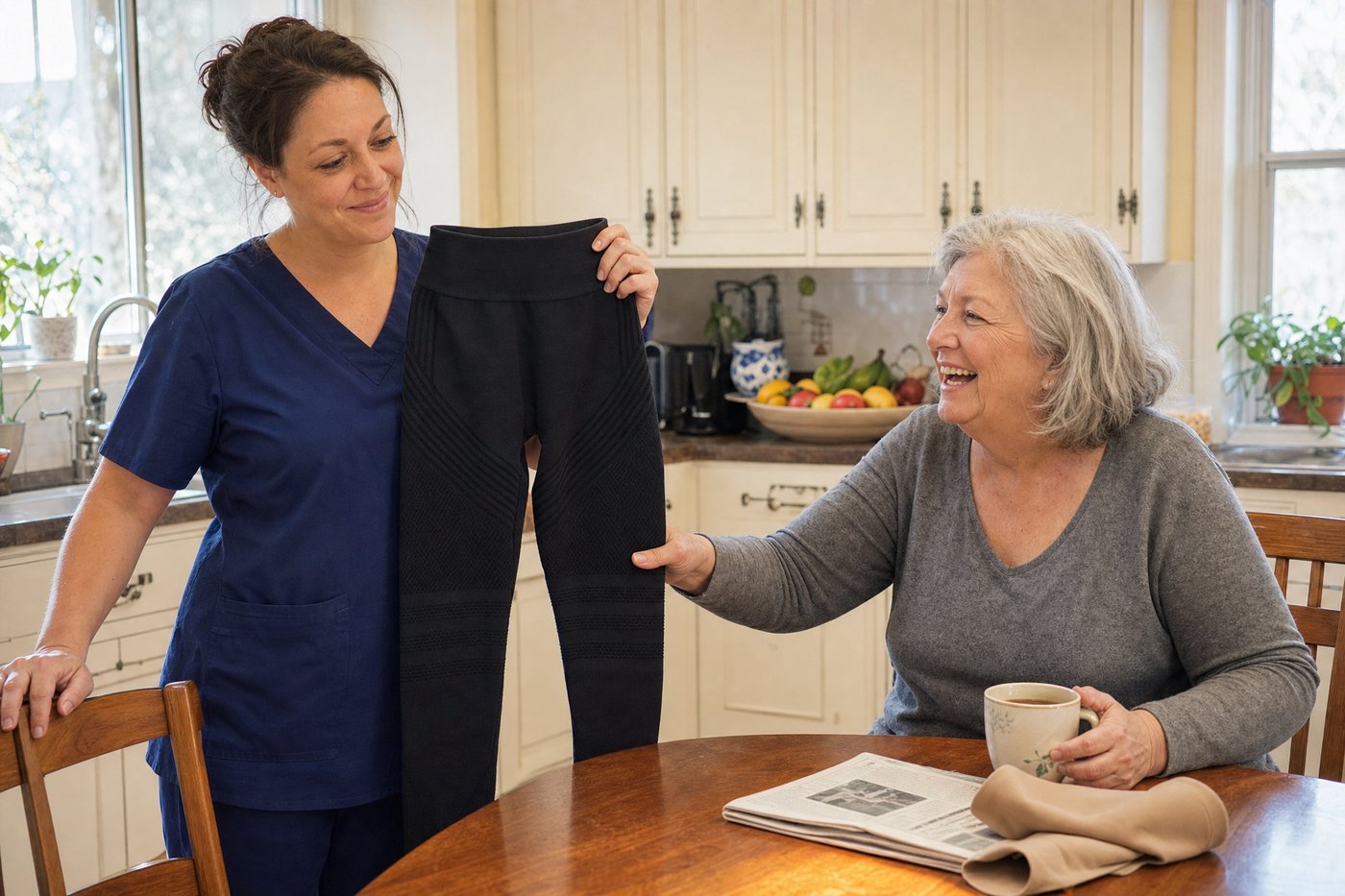
My mother is 66. For eleven years her ankles have swelled by four o'clock.
I am a nurse. I fit compression on other people's legs for a living, and I could not get my own mother to keep any of it on. Drugstore knee-highs rolled down by lunch. The beige prescription stockings took the two of us and a plastic bag to get on, then lived in a drawer. The zip-ups pinched behind the knee. The ankle sleeves did half a leg. The gel insoles did nothing at all. Six kinds, six drawers. Last spring I brought her the black leggings three of the night girls wear under their scrubs. She has worn them every day since, and at six o'clock they are still on. Here are the five reasons, starting with the one I should have known first.
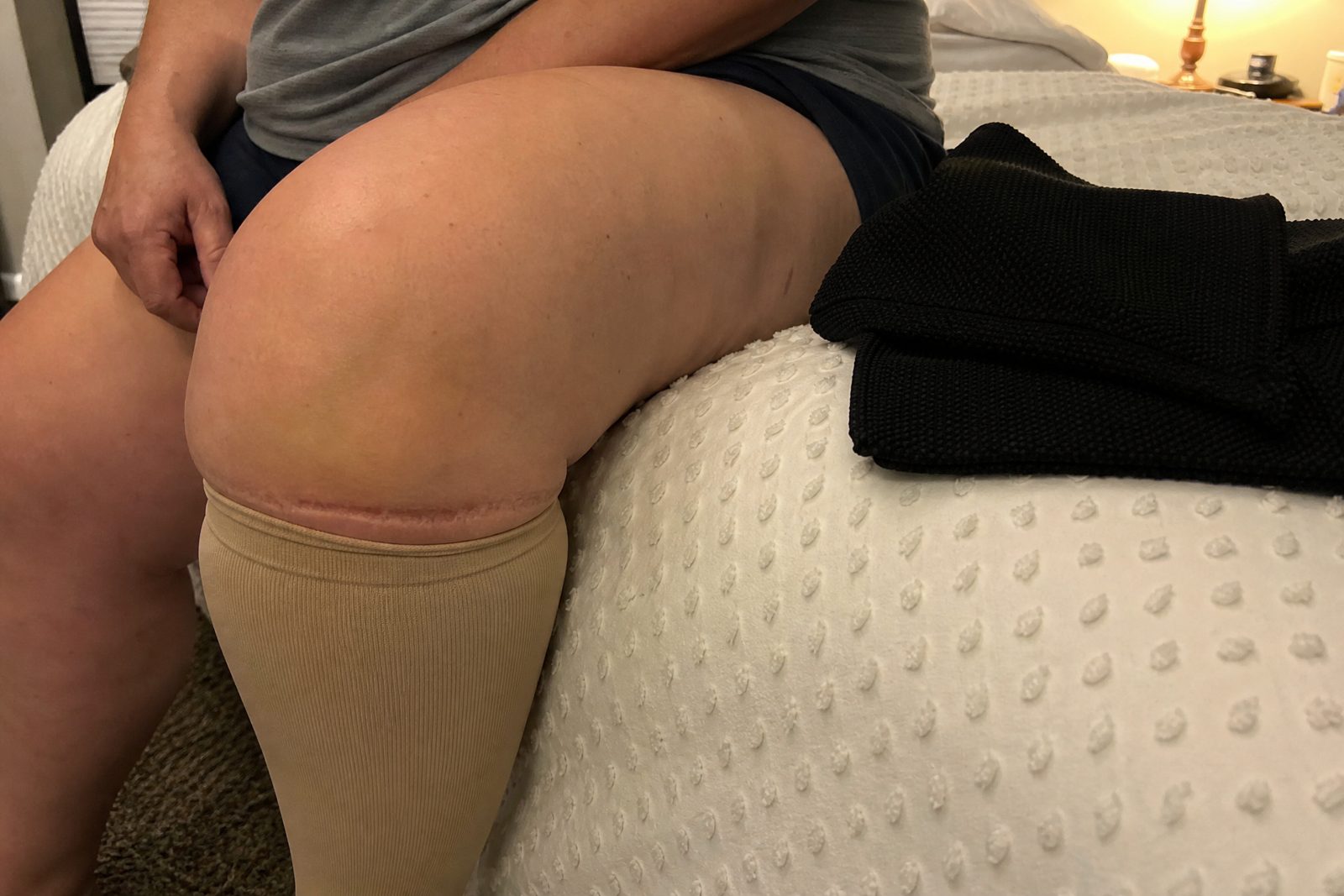
The ring above her ankle was never her socks being too tight.
Press your thumb into your shin just above the ankle at six in the evening, count to five and let go. If a dent stays, that is fluid, and it has been sitting there since lunch. One in five Americans over 51 has persistent swelling in the feet or ankles, women more than men.1 Standing still, or sitting still, lets gravity pull blood and fluid down into the lower leg, and the calf muscle that is supposed to pump it back barely fires. A knee-high squeezes the bottom of the leg and stops exactly where that fluid is heading. Sira Sculpt 4D Compression Leggings carry the same ankle-up principle from the foot to the waist, with no band anywhere to leave a ring.
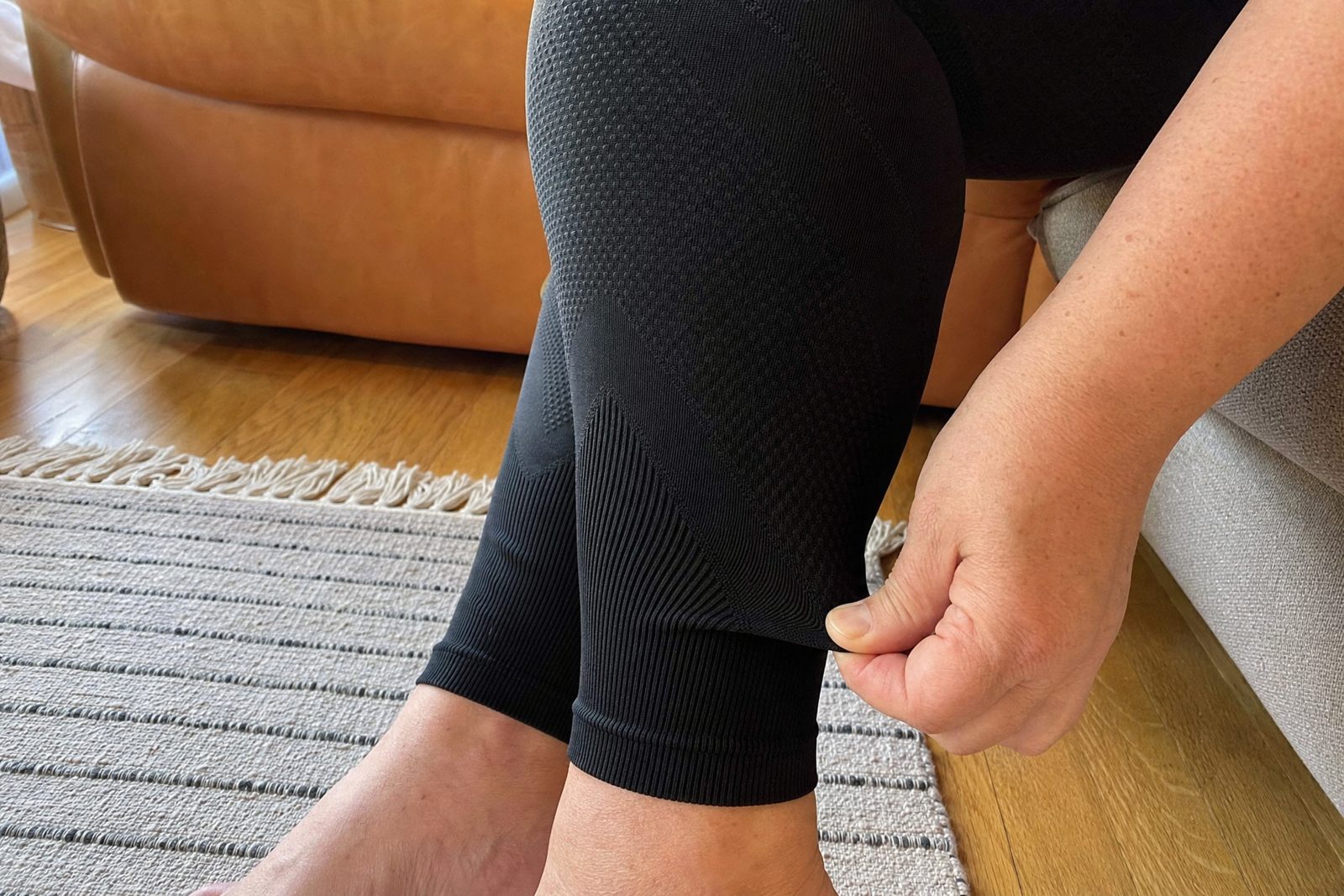
What Japanese 4D compression actually is.
Ordinary compression leggings squeeze the same everywhere. These are knitted firmest at the ankle and ease as they climb, so every step to the mailbox nudges fluid up instead of holding it in place. Pinch the knit at the ankle, then at the thigh, and you feel the difference with your fingers. In a study of healthy legs over a normal day, the lower leg gained 62 to 94 mL of fluid by evening, and light graduated compression reduced or prevented it.2 It is how compression is worn every day in Japan, against the evening swelling they call mukumi.
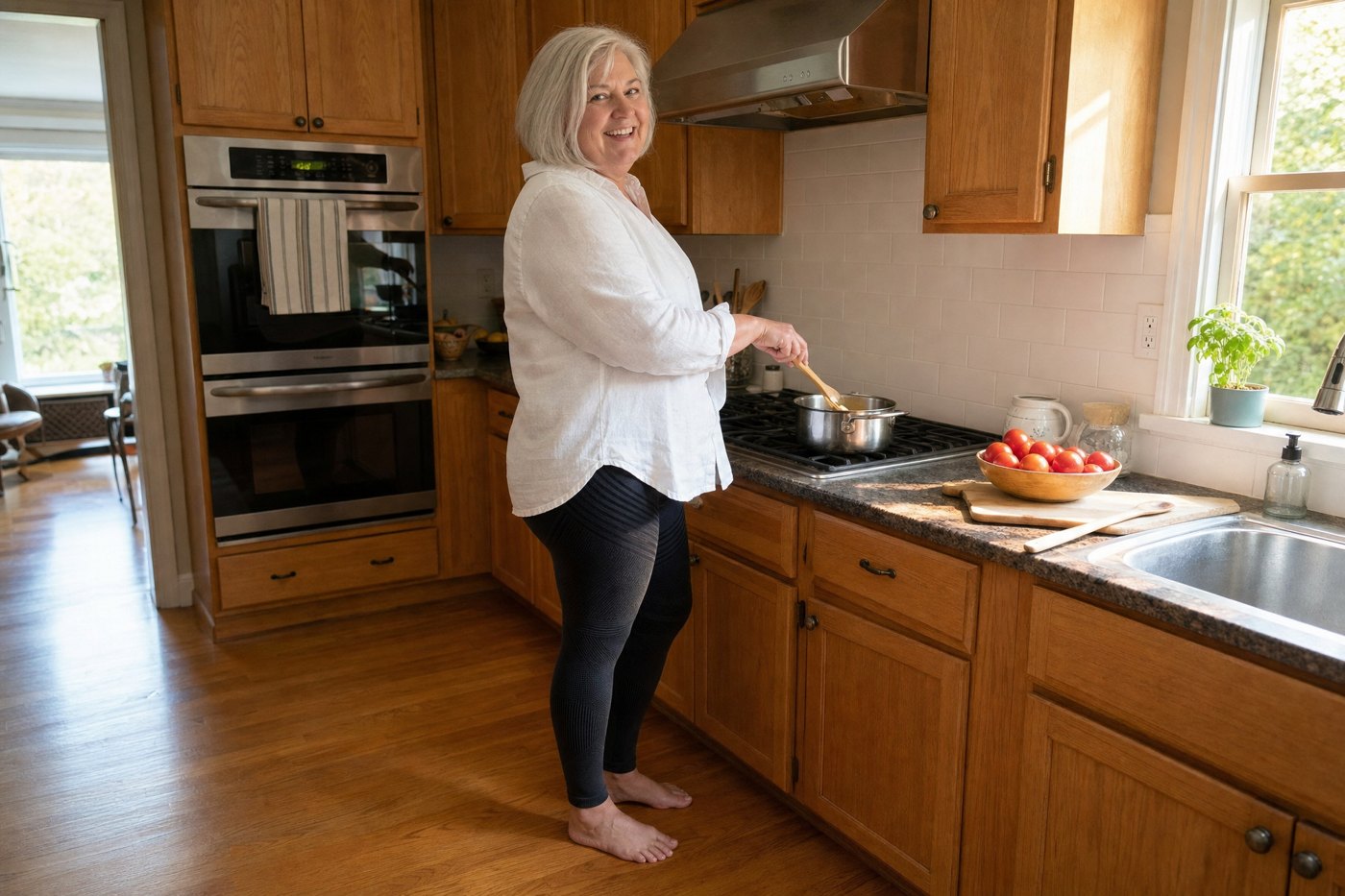
Lighter by 6 pm.
Her day had a shape. Fine at nine, shoes tight by two, the ring by five, feet up on the couch by seven. The first week she called me at a quarter past six to tell me she had cooked dinner standing up and had not noticed until she sat down. The swelling that normally arrived around four simply had not come. These are not a cure and she still puts her feet up after a long day. What changed is the day itself. A study of people on real 12-hour standing shifts found the group in ordinary socks finished with lasting leg fatigue, swelling and discomfort, and the group in light graduated compression did not.3 That is her, at the stove, at six.
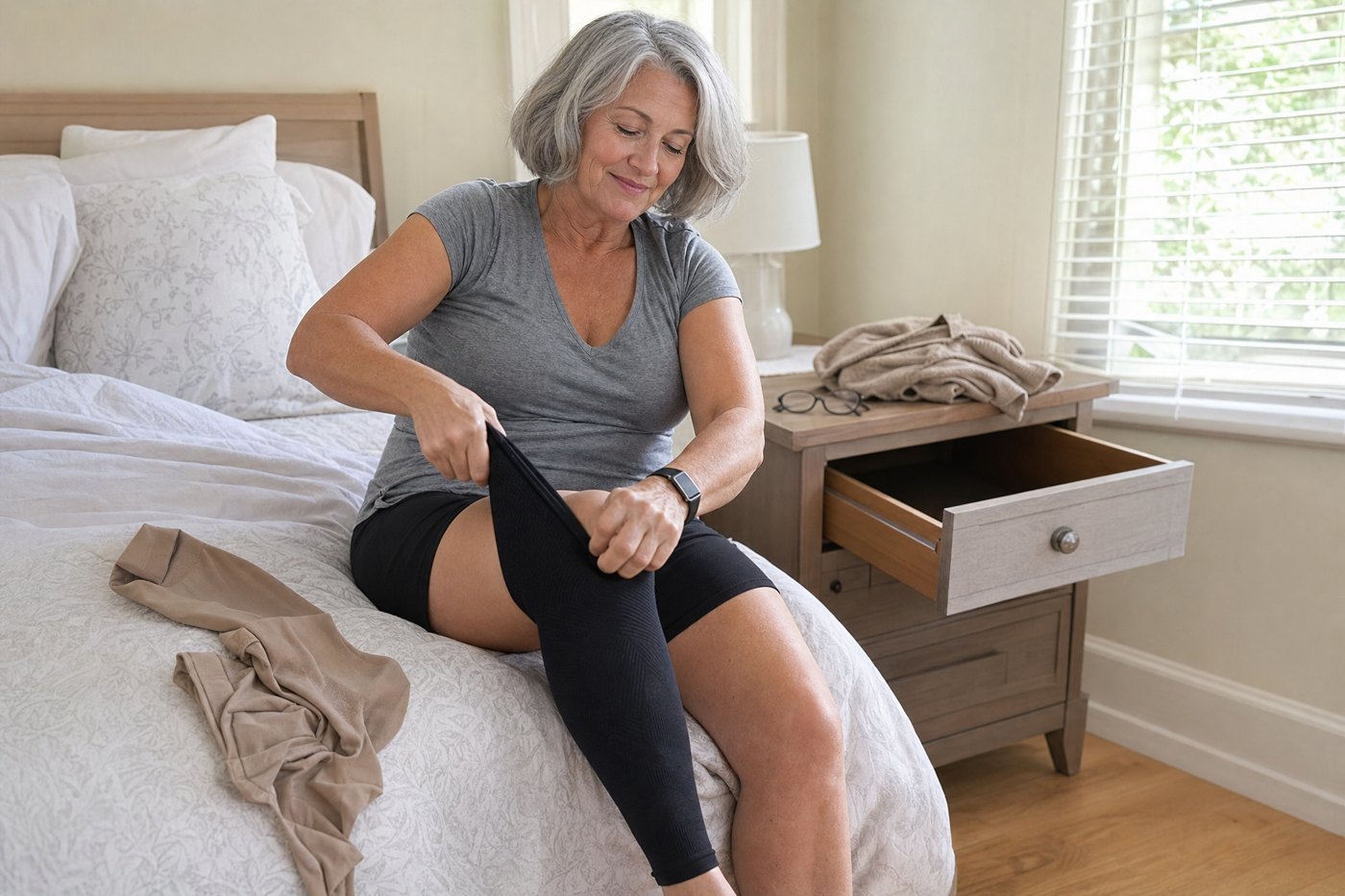
On in ten seconds. No gloves, no plastic bag, no fight.
Compression only works if it is on your legs, and hers was in a drawer because getting it on took ten minutes and two people. These slide on like a legging while the kettle boils. The knit is 90 percent polyamide and 10 percent elastane, it breathes, so it does not itch or hold heat by the afternoon, and it is fully opaque in black, slate, mocha, burgundy and royal blue. Under a dress, with a long cardigan, at church or at the store, they look like leggings, not a medical device. Cold wash, and they come out still black.

Cut for her legs, S to 5XL. And two pairs cost less than the good socks.
Wide calves and full thighs are the whole reason sock bands dig. These are cut for full calves and thighs over a smaller waist, S to 5XL, with an inch chart that tells the truth and a free exchange if the first size is off. Two pairs cost $64.95, which is less than my mother had spent on the drawer of stockings she never wore, and two is the point: one on her, one in the wash, every day.
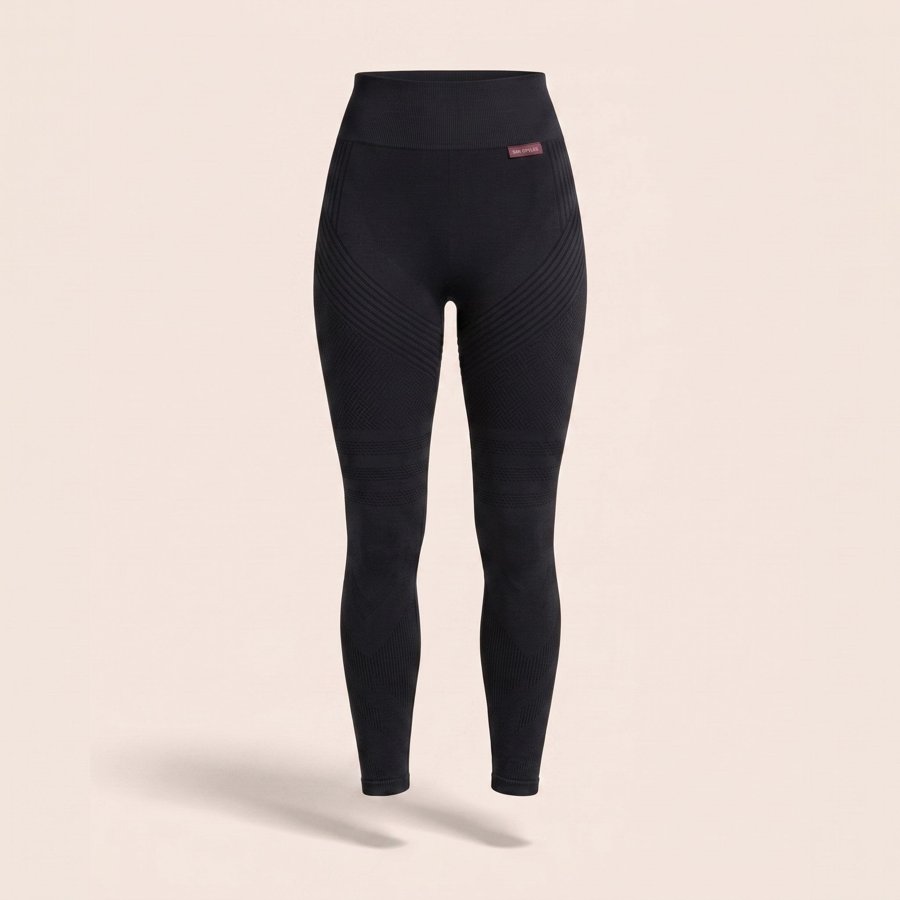
Buy 1, Get 1 Free. One to wear, one in the wash.
This limited-time offer is highly sought after, and sizes XL to 4XL are selling fast. Secure yours before it's too late!
Check availability →To claim it: tap the button, choose your size and color, and the second pair drops to $0 at checkout. No code needed. 90-day money-back guarantee.
Sources
- Health and Retirement Study analysis, PLOS One 2021: persistent swelling in the feet or ankles reported by 19 to 20 percent of US adults aged 51 and over, with older age and female sex among the associated factors. PLOS One.
- Partsch et al., Dermatologic Surgery 2004: healthy lower legs gain 62 to 94 mL of fluid over a normal day; light graduated compression reduced or prevented it. PubMed 15099316.
- Garcia et al., Human Factors 2023: workers on real 12-hour standing shifts; the regular-sock group developed lasting muscle fatigue, swelling and discomfort, the light graduated compression group did not. PubMed 34078143.
Comments